


The Skeleton and the Skin
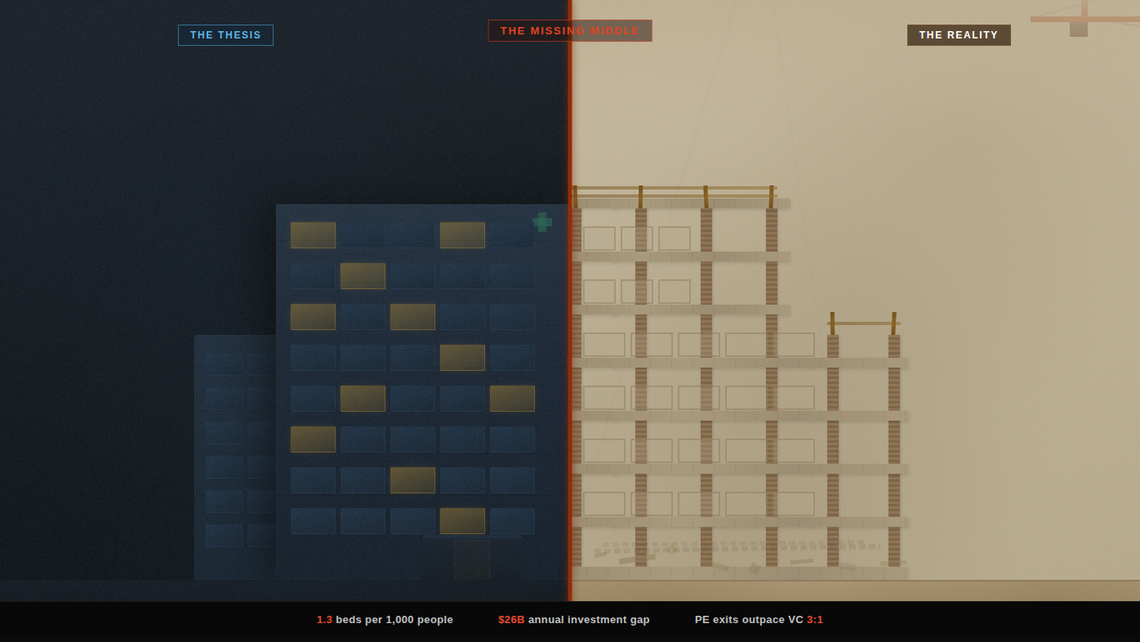
What Nigeria's capital funding collapse means for African healthtech, and why the companies filling the gap are building a private healthcare system from the ground up.
AI-assisted writing is transforming how we communicate, just as it’s revolutionizing code, healthcare, and design. Original thought is still the true power.

There’s a strange obsession with spotting AI-assisted writing these days—as if it somehow discredits the outcome. But except in the context of academic assessments, this line of questioning feels misguided.
Tools like ChatGPT and Claude are doing what they were designed to do: help people express themselves more clearly and effectively. They aren’t a substitute for thinking—they’re instruments that extend thought. The better your ideas, the better the output.
In fact, the more I use AI to refine my writing, the stronger a writer I become. I can now turn messy, jumbled thoughts into a coherent article overnight—something that used to take days of rumination or get abandoned altogether.
This is not unlike using a calculator. No one asks if you used your brain or a calculator to compute 34 x 76—and if you did it manually, it’s considered inefficient.
We don’t dismiss software-aided design or data tools in business. So why do we gatekeep the writing process?
As Rick Wong put it, “Technology is best defined by any advantage not yet accessible to the mass. Makes sense that those who can wield it will have an advantage.” We already see this in how AI enhances fields that require massive expertise and sensitivity—like precision medicine or drug discovery, where it helps map genetic markers, simulate outcomes, and accelerate life-saving research. If we trust AI with matters of life and death, why balk at its use in communication?
Paul Graham echoed this sentiment when he said AI will increase the variation in returns for work—that is, mediocre inputs yield little, and great inputs yield more. Technology magnifies the difference between average and excellent. Lazy use of AI will still lead to lazy work. But thoughtful use? That’s where magic happens.
Harry DeMott went a step further: the value of AI accrues to those with wisdom—those who’ve spent years honing their craft. It’s not about asking if someone used AI, it’s about what they brought to it. The questions you ask, the insights you inject, and the originality you refine—that’s where the value lies.
So when I write, I don’t expect AI to generate my thoughts. I bring the insights, the lived experience, and the half-formed arguments—and let AI help me sharpen them. That’s not cheating. That’s collaboration.

Paul Mit says it best:
“AI won’t replace you. Someone using AI will.”
The sooner we stop resisting that truth, the sooner we can get better at what matters: thinking clearly, communicating powerfully, and doing more with the tools we now have.
Research-driven writing on healthcare, technology, policy, and the systems that shape care across Africa.



Member discussion